1.02.2013

Repair & Replacement


After a long and consumptive holiday hiatus, OG is back on the soapbox.

I feel a need to offer penance after a holiday like Christmas. On this blog, and in my life, I love to go on about consumerism, planned obsolescence, and unintended consequences. But, on December 25th, these things are abandoned, shouted down by cultural fiat. 

My family has made some attempt to address the true meaning of Christmas, instituting a five-dollar limit on gifts. This is great, but it doesn't help my own craven failings . . . 

I went to the mall last week.

I'm not proud of it. But hey, I needed some things, and there were sales, and sometimes you need to try things on . . .

And so the penance. A New Year's purge has cleared closets and enriched Goodwill. Insufficiently sated, I went on a repair binge.

Damaged goods.

12.16.2012

On (Design) Failure II

Almost exactly a year ago, I shared a story about failure in the shop. Perhaps, after 12 months of middling successes, I was due for another one. Unlike the previous failure, the Barrel Chair, this one works, in some sense of the word. 

Over the last few weeks at work, at the ReBuild Foundation, we've been in the middle of shuffling our studio and shop as leases change and new spaces come on line. As we palletized piles of material, we chewed through dozens of rolls of packing plastic -- a sort of industrial cling-wrap. It came on 3-1/4" diameter cardboard rolls. I found a few more tubes of a similar diameter in a dumpster in our building.

The raw materials.

12.09.2012

The Organized Guerilla

We modern Americans are quick to pathologize. With all the pharmaceutical ads, covering a broad spectrum of real (depression, heart disease) and imagined (short eyelashes) disorders, everyone is familiar with the language of diagnosis and treatment. Those terms have quickly become part of our everyday lexicon, as people toss off armchair opinions about bosses, spouses, and co-workers -- bi-polar, Asperger-y, and, my favorite, OCD.

Every designer and craftsman has got a touch of the neurotic. A dose of intensely-focused, self-critical thinking is key to pushing the intellectual process forward. Obsessive Compulsive Disorder is a specific type of neuroticism, focused on unhealthy, repetitive behaviors (rituals) that bring a measure of calm to an anxious person. OCD, when used in a slang context, is usually wrongly attributed to someone who is (overly) organized or clean. While certain cleaning activities may be ritualized by a true OCD sufferer, merely being neat is not a mental disorder.


A small portion of the mess.

11.25.2012

Road Sign Lounger

A few years ago, down in Alabama, I led a group of students in the construction of a fence made of scrapped road signs. I had long been fascinated by road signs -- the graphics, the reflective surface, the raw materiality of 1/8" solid aluminum -- and finally had a stockpile, donated by the county, to play around with. The fence was fairly straightforward: we just cut the signs into strips, which then served as pickets on a conventional wood frame. Offcuts and stop signs were pieced together to make gates, doors, and roofs for shade structures. 

The daycare fence and H.E.R.O. community garden gave me a chance to experiment with techniques for cutting the signs. Aluminum is fairly soft, and I found a carbide-toothed finishing blade (60 teeth) jacked into a regular circular saw to be a simple, effective solution. We also tried a similar blade in a table saw, but the kickback and strain on the motor was kind of nasty. 

The Road Sign Lounger.

11.18.2012

Knolling (Orthogonal Joy)

Last week, America voted. Design Observer published an interesting piece on the arrangement of polling places. The layout of these school cafeterias, church basements, and VFW halls are up to the individual poll workers, and often follow no particular order. That said, people instinctively tend to set up space in certain ways -- for instance, arranging the voting booths parallel to the walls of the room, or figuring out paths for lines of people that make ninety-degree turns. 

The author, Alexandra Lange, then moved on to riff about "knolling", a term coined twenty-odd years ago by Andrew Kromelow, then working in Frank Gehry's fabrication shop. It refers to the practice of placing objects in squared arrays, aligned with the surface they rest on or the walls of the room that contains them. Kromelow, cleaning up the workshop each night, would neatly lay out all of the tools on the pegboards and work benches. As legend has it, Gehry was then working on a line of furniture for modernist heavyweight Knoll, and so Kromelow named his practice after the angular pieces. Another artist, Tom Sachs, popularized the term and made a video about it, Always Be Knolling.


11.11.2012

Black Cinema House III

From late April through August, as previously reported here and here, I had been working as a carpenter on the Black Cinema House. One of the buildings in Theaster Gates' Dorchester Projects, BCH is a place to archive, study, and present films of the African diaspora. The basement has space for classes; the first floor has a kitchen, an office, bathrooms, and screening space; and the second floor is a private apartment.

Just recently, BCH finally got its final coat of paint, landscaping, and other finishing touches. Two weeks ago, they premiered the space with two screenings -- The Story of a Three-Day Pass, directed by Mario Van Peebles, and a Halloween event for neighborhood kids. This weekend, BCH and Dorchester Projects were host sites for the Art of Placemaking Conference, sponsored by the University of Chicago, the ReBuild Foundation, and the Bruner-Loeb Forum.


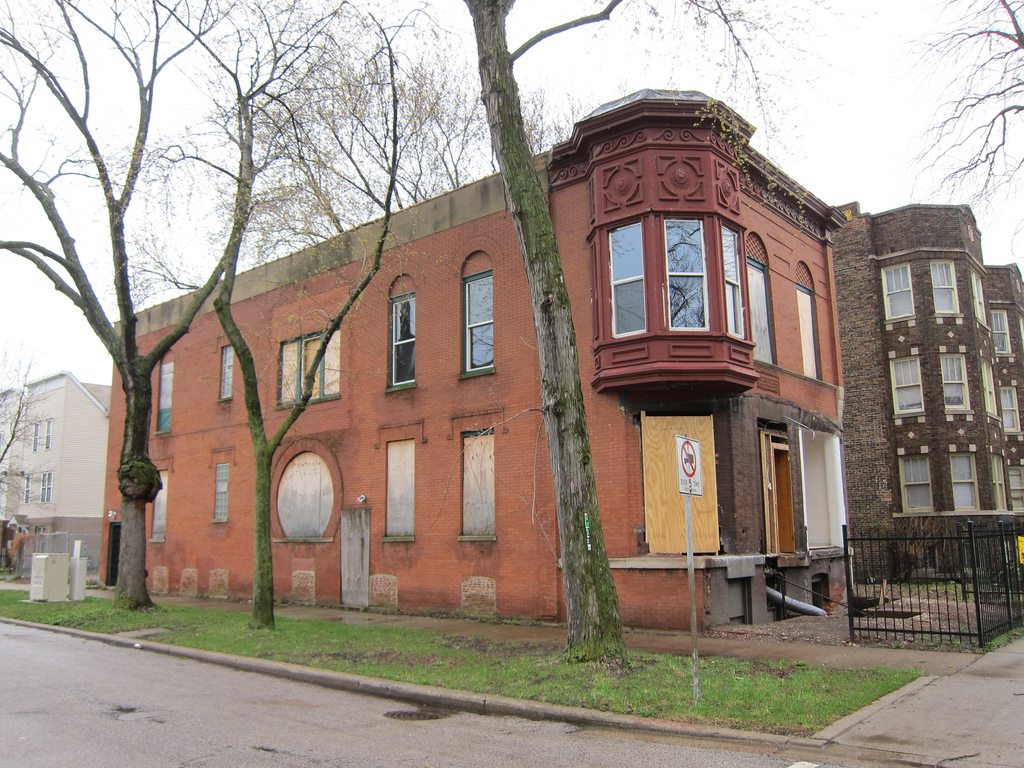
Black Cinema House, as it once was.

11.03.2012

Lebbeus Woods

I was saddened this week to hear of the passing of Lebbeus Woods, on October 30th, at the age of 72. He was an architect, professor, writer, and theorist. Few of his designs were ever built. Other visionary, experimental designers -- Buckminster Fuller, Rem Koolhaas, Zaha Hadid -- eventually, however late in life, made the leap from paper to built reality. Woods was different. The force of his imagination was such that many of his ideas are simply impossible to realize with the technologies and cultural conditions of today. His drawings and paintings -- massive, stark, violent, beautiful -- present visions of a world unmoored from history, time, and space.

High Houses.
He wrote extensively, publishing almost thirty books, untold articles, and a lovely blog. His practice, in his own words, is described thusly: 

"Over the past thirty years, my thoughts have followed a single line, in many parallel ways. lt can be summarized in a single question: what is the place of one person - any individual - in the complex, ever-changing landscape of the world? lt is a question without a fixed or universal answer. Still it must be asked. Answers, however provisional, must be attempted. This is particularly urgent for the apportioning and use of space, which every person needs, and which the work of architecture explicitly provides. The installations I have designed and made in collaboration with others explore the phenomena of change in material and spatial terms. . . . The aim is not to disturb the stability, but to provide strategies for adaptation when transformation occurs. Even more, they celebrate change and the energies driving it, as the essence of existence."

A cityscape.